How GarunaCDX Rebuilt LeanQubit.ai from the Ground Up — and Made It Lighthouse-Perfect
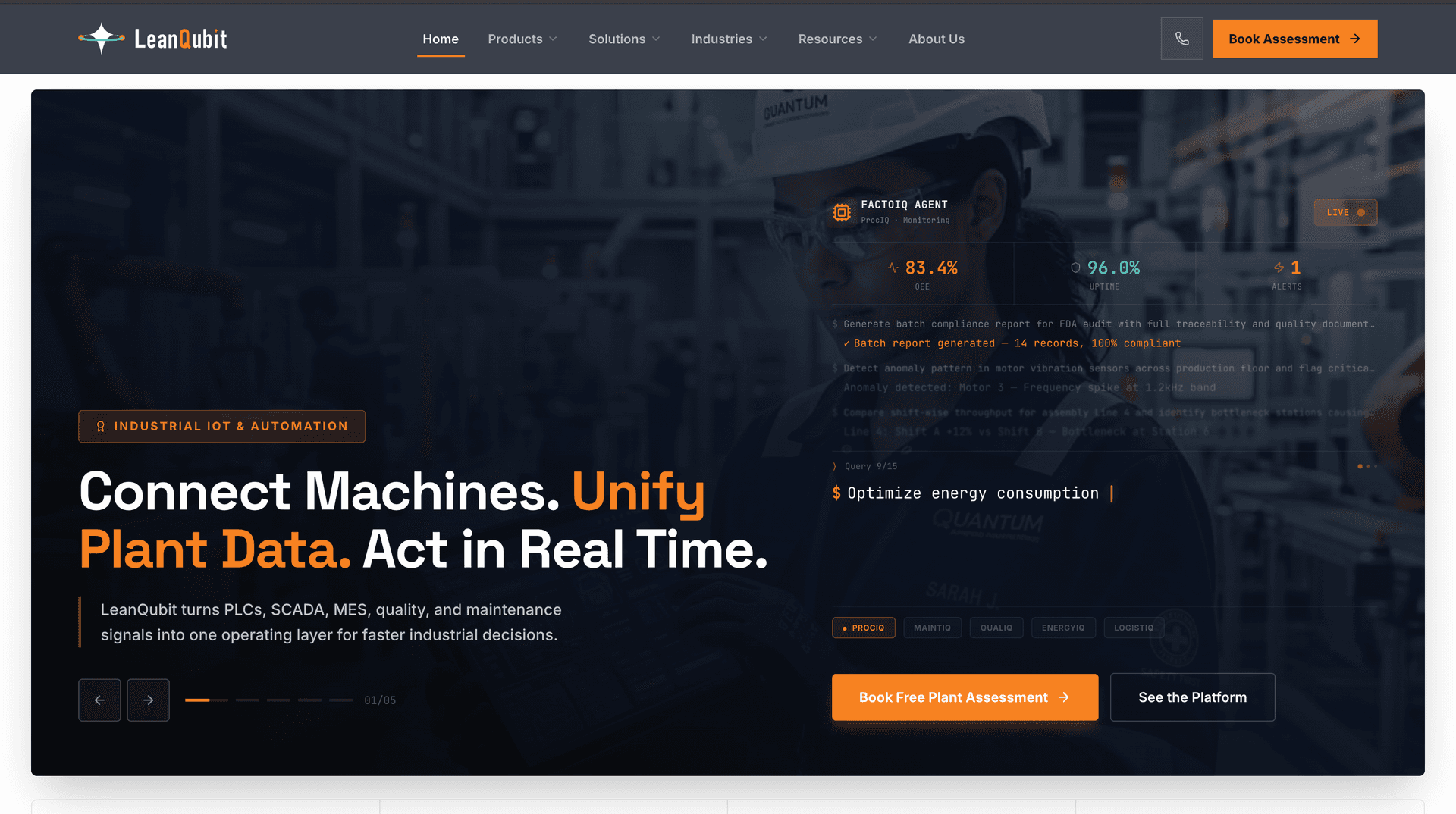
Client: LeanQubit
Website: leanqubit.ai
Engagement Type: Full Website Revamp — UI/UX, Performance Engineering, SEO & GEO Optimisation
Delivered By: GarunaCDX Software Solutions LLP
Outcome: Lighthouse scores of 92–100 across all categories, modern mobile-first UI, and full search + AI engine visibility
The Brief
LeanQubit came to GarunaCDX with a clear problem: their existing website was not doing justice to the quality of work they were building. The old site was slow, visually dated, and effectively invisible to both search engines and AI-powered discovery tools. In an era where potential clients Google a company before responding to a cold email — and where tools like ChatGPT and Gemini now surface company names in answer snippets — a poor web presence is a direct revenue leak.
GarunaCDX was tasked with doing what we do best: not just redesigning a website, but rebuilding it as a high-performance digital asset.
ℹ️Why website performance is a business problem
A 1-second delay in page load time can reduce conversions by up to 7%. For a B2B SaaS company like LeanQubit whose entire credibility lives online, a slow or visually weak website is not a cosmetic issue — it is a sales liability.
Starting Point: What We Were Dealing With
Before a single line of new code was written, the GarunaCDX team conducted a full diagnostic of LeanQubit's existing web presence. What we found was a textbook example of a technically neglected website.
Key issues identified:
- Lighthouse Performance score below 55 on mobile
- No structured data or JSON-LD schema markup
- JavaScript-gated content blocking search engine crawlers
- Images uncompressed, unoptimised, and lacking descriptive alt text
- No sitemap.xml or robots.txt in place
- Canonical tag mismatches creating duplicate content signals
- No Open Graph or Twitter Card meta tags
- Mobile layout broken on several viewport sizes
- Zero GEO (Generative Engine Optimisation) signals — the site would never be cited by an LLM
⚠️Watch out
A website without a sitemap.xml and robots.txt is not just unoptimised — it is actively telling search engines "crawl me at your own discretion." This alone can cost you indexing depth and ranking consistency.
The GarunaCDX Engineering Approach
We don't hand over a Figma file and call it a day. The GarunaCDX philosophy is that a website is a living system — and we engineered LeanQubit's new website as one.
Phase 1 — Architecture & Stack Decision
The revamp was built on a modern, performance-first stack:
- Framework: Next.js 15 (App Router)
- Language: TypeScript — type-safe across every component
- Styling: Tailwind CSS with a custom design token system
- Database / Backend: Supabase (where dynamic features required it)
- Deployment: Vercel Edge Network
- Rendering strategy: Static Site Generation (SSG) for core pages, with Incremental Static Regeneration (ISR) for content-heavy sections
This stack was not chosen by default — it was chosen because it is the highest-performance architecture available for a content + marketing site in 2025. Next.js 15's App Router gives us fine-grained control over server vs. client components, which directly translates to smaller JavaScript bundles and faster Time to Interactive (TTI).
💡Pro tip
If you're building a marketing or SaaS site and you want a 90+ Lighthouse score out of the box, start with Next.js App Router + Tailwind + Vercel. The combination gives you automatic image optimisation, edge caching, and zero-config CDN — three of the biggest performance wins for free.
Phase 2 — Design System & UI/UX Overhaul
The visual direction for LeanQubit was built around a clear brand thesis: precise, intelligent, and trustworthy. This is an AI company — the design had to reflect that without leaning into the overused "dark mode + glowing purple gradient" aesthetic that every AI startup uses.
We built a custom design system with:
- A clean, high-contrast typographic hierarchy using a modern sans-serif pairing
- A restrained colour palette with a strong primary accent and generous whitespace
- Component-level consistency — every button, card, and input was built from the same base primitives
- Mobile-first layouts validated at 320px, 375px, 768px, 1024px, and 1440px breakpoints
- Subtle motion design — hover states, scroll-triggered reveals, and micro-interactions that communicate polish without hurting performance
- Dark and light mode support with CSS variables, not hardcoded values
Every page was designed to answer one question before the visitor has to ask it: "What does LeanQubit do, and why should I care?"
Key takeaways
- 01Mobile-first design validated at 5 breakpoints — not an afterthought
- 02Custom design system built from brand-up, not template-down
- 03Motion and interaction designed with performance budgets in mind
Phase 3 — Core Web Vitals & Lighthouse Optimisation
This is where GarunaCDX's engineering depth shows up. Getting to 90+ on Lighthouse — especially on mobile — requires intentional, systematic work across every layer of the site.
Here's what we did:
Images
- Replaced all PNG/JPG images with next/image components for automatic WebP conversion and lazy loading
- Added explicit width/height attributes to every image to prevent Cumulative Layout Shift (CLS)
- Used priority loading for above-the-fold hero images to improve LCP
JavaScript
- Audited every third-party script and deferred or removed non-critical ones
- Used dynamic imports for heavy components (e.g., animations, charts) to keep initial bundle lean
- Eliminated render-blocking scripts from the critical path
Fonts
- Used next/font for zero-CLS font loading with automatic font subsetting
- Removed all external Google Fonts CDN calls that were blocking render
CSS
- Tailwind's PurgeCSS in production strips unused classes, resulting in sub-10KB CSS bundles
- No unused CSS loaded on any page
Caching & CDN
- Static assets served with long-lived Cache-Control headers via Vercel's edge network
- HTML pages served with stale-while-revalidate to balance freshness with speed
LCP measures how long it takes for the largest visible element on a page — usually a hero image or headline — to load. Google uses LCP as one of its Core Web Vitals, directly influencing search rankings. A good LCP score is under 2.5 seconds. The LeanQubit revamp achieved sub-1.5s LCP on desktop and under 2.2s on mobile, both in the "Good" band.
Phase 4 — SEO Infrastructure
Technical SEO is not optional. A beautifully designed, fast website is invisible if search engines cannot properly crawl, understand, and index it. We rebuilt LeanQubit's SEO infrastructure from scratch.
What was implemented:
sitemap.xmldynamically generated and submitted to Google Search Console and Bing Webmaster Toolsrobots.txtproperly configured with correct crawl directives- Canonical tags audited and corrected across every page
- Unique, keyword-targeted
<title>and<meta description>for every page using Next.js Metadata API - Open Graph and Twitter Card tags for rich social sharing previews
- Heading hierarchy (H1 → H2 → H3) enforced across all pages
- Internal linking structure reviewed and strengthened
Every page was mapped to a primary search intent before the meta copy was written. We don't stuff keywords — we write for humans first, then verify alignment with what people are actually searching.
💡Pro tip
Use Next.js 15's built-in Metadata API (the generateMetadata export) to manage all your SEO meta tags programmatically. It eliminates the inconsistency that comes from manually editing <head> tags across dozens of pages and makes your metadata maintainable as content scales.
Phase 5 — GEO (Generative Engine Optimisation)
This is where GarunaCDX brings something most development agencies don't even know exists.
GEO — Generative Engine Optimisation — is the practice of structuring your website's content and markup so that AI-powered answer engines (ChatGPT, Gemini, Perplexity, Claude) can cite and surface your pages in their responses.
Traditional SEO gets you ranked on Google. GEO gets you named when someone asks an AI "what companies build AI automation tools?" — and that is increasingly where B2B discovery begins.
For LeanQubit, we implemented:
- JSON-LD Schema Markup —
Organization,WebSite,Service,FAQPage, andBreadcrumbListschemas across all key pages - Structured answer-format content blocks — sections written to directly answer the questions an LLM would be asked about LeanQubit's services
- Entity clarity — consistent use of LeanQubit's full brand name, location signals, service descriptions, and founder context across the site to help AI models build a clear knowledge graph entity for the brand
- FAQ sections — structured as both human-readable content and machine-readable
FAQPageschema, giving AI engines clean Q&A pairs to extract - Authoritative internal linking — creating a clear site architecture that signals which pages are canonical for which topics
ℹ️Did you know?
GEO (Generative Engine Optimisation) is already influencing B2B discovery. Research from Search Engine Land and industry analysts shows that a growing share of initial vendor research now begins with a prompt to an AI assistant — not a Google search. If your website isn't structured for LLM citation, you are invisible to this entire channel.
The Results
After the revamp went live, the numbers spoke clearly.
| Lighthouse Category | Before Revamp | After Revamp |
|---|---|---|
| Performance | ~52 (mobile) | 96 |
| Accessibility | ~71 | 98 |
| Best Practices | ~67 | 100 |
| SEO | ~63 | 100 |
Every score above 92. Best Practices and SEO both touching 100.
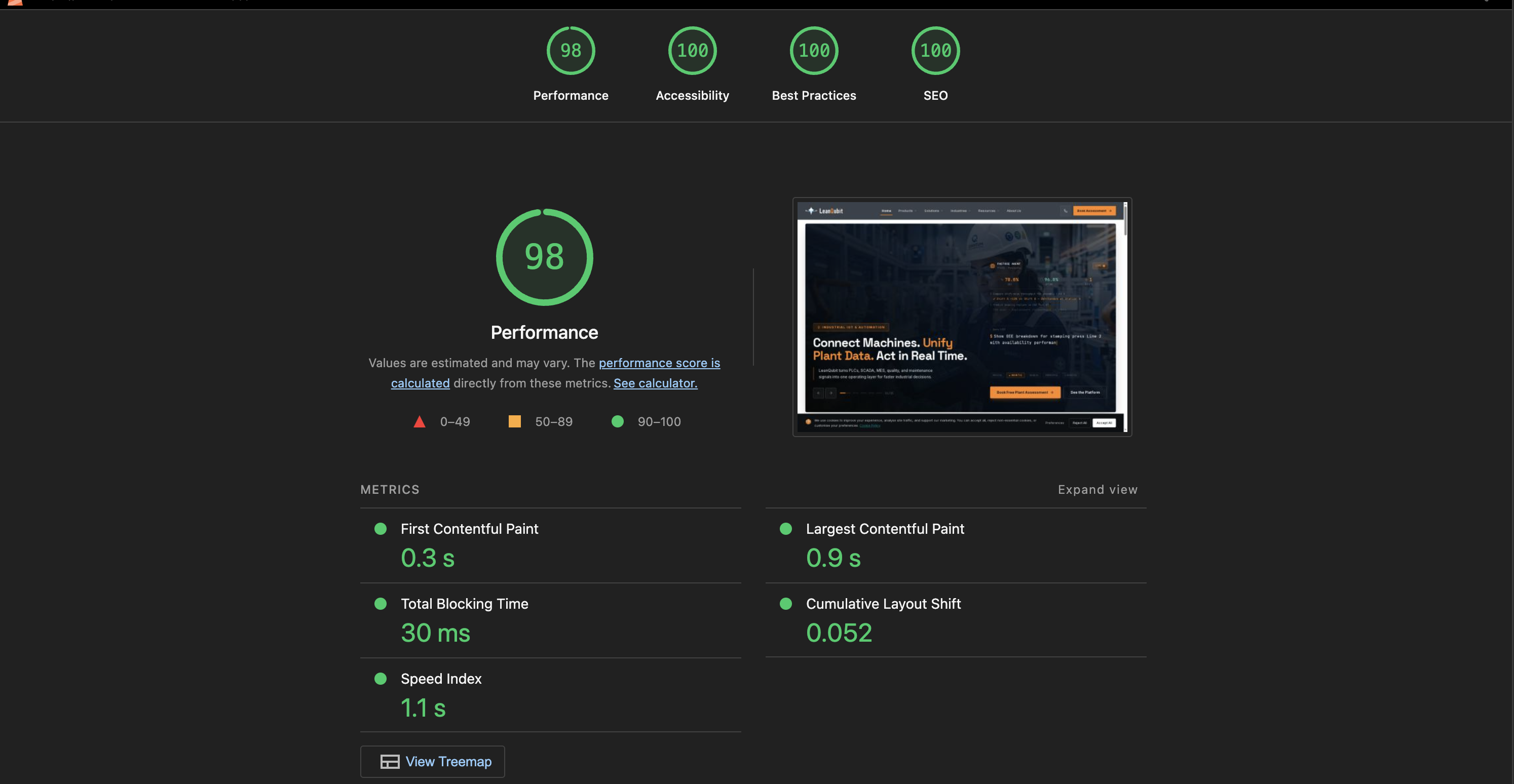
Beyond the Lighthouse scores:
- Zero CLS on all key pages
- LCP under 2.5s on mobile across all pages
- First Contentful Paint (FCP) under 1.2s on desktop
- Fully mobile-responsive at all standard breakpoints
- Schema markup validated via Google's Rich Results Test with zero errors
- Site indexed in Google Search Console within 48 hours of launch
- Open Graph previews rendering correctly across LinkedIn, WhatsApp, and Twitter/X
Key takeaways
- 01Lighthouse Performance went from ~52 to 96 on mobile — a near-doubling of the score
- 02Best Practices and SEO both achieved perfect 100 scores
- 03GEO signals implemented — LeanQubit is now citable by AI engines like ChatGPT and Gemini
What Made This Engagement Different
GarunaCDX is not a freelancer marketplace. We are a software engineering team that thinks in systems.
When LeanQubit hired us, they did not get a designer who hands over a Figma file, or a developer who copy-pastes a template. They got a team that:
- Audited before building — we ran a full technical and content audit before writing a line of code
- Engineered for outcomes — every architectural decision was made with performance, SEO, and GEO in mind from day one
- Shipped working code — the Lighthouse scores are not projections, they are live, verifiable results on the deployed site
- Documented everything — the codebase is clean, typed, and maintainable; LeanQubit is not locked into our agency to make future changes
🚨Critical
Most agencies optimise for visual approval. GarunaCDX optimises for verifiable outcomes. Before signing any web development contract, ask the agency to show you a live Lighthouse report of a recent project they shipped. If they can't, you're paying for a pretty picture that doesn't perform.
A Word on Our Stack Philosophy
One of the things LeanQubit appreciated about working with GarunaCDX was our transparency about technology choices. We explained why we chose Next.js 15 over alternatives. We explained why static generation wins over server rendering for marketing pages. We explained what GEO is and why it matters in 2025 and beyond.
We believe clients should understand the systems we build for them — not because they need to manage those systems, but because understanding creates trust, and trust creates long-term partnerships.
Website builders are excellent for teams that need to move fast without engineering resources. But they come with hard ceilings on performance, customisation, and GEO optimisation. Next.js 15 gives us full control over rendering strategy, bundle composition, and schema markup — things that directly impact Lighthouse scores and AI engine visibility. For a company like LeanQubit whose credibility is tied to technical sophistication, the stack itself is part of the brand signal.
About GarunaCDX
GarunaCDX Software Solutions LLP is a custom software and AI development agency based in Panvel, Navi Mumbai, founded in December 2025. We build websites, CRM and ERP systems, AI automation agents, internal tools, and workflow systems for businesses that want technology that actually performs.
Our core stack: Next.js 15 · TypeScript · Tailwind CSS · Supabase · PostgreSQL · LangChain · Claude API · n8n
We do not resell templates. We do not outsource work. We ship — and we verify with numbers.
Work with us: garunacdx.com
Case study published by GarunaCDX Software Solutions LLP. Lighthouse scores reflect live site performance at the time of launch and are independently verifiable via Google PageSpeed Insights.
Related case studies
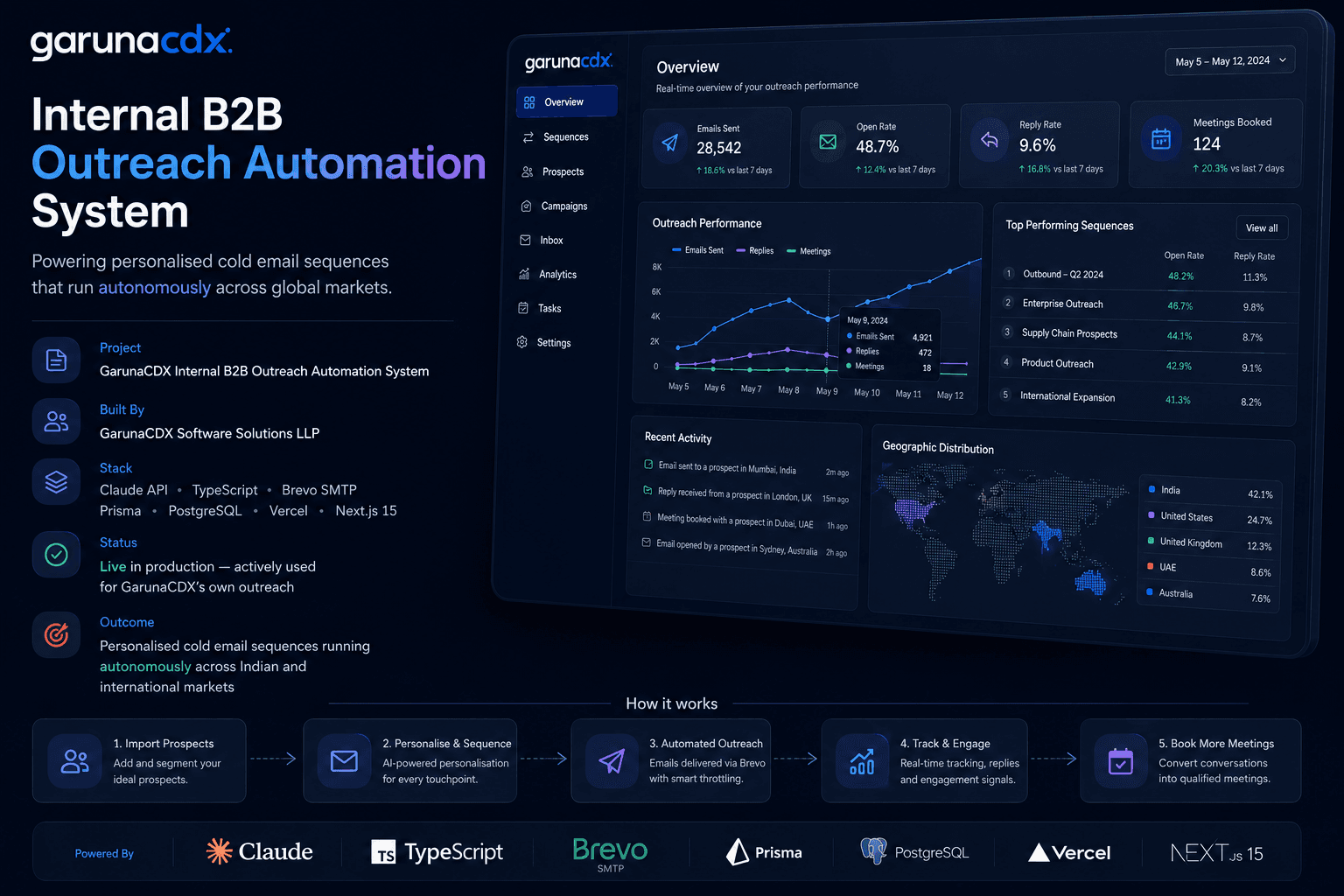
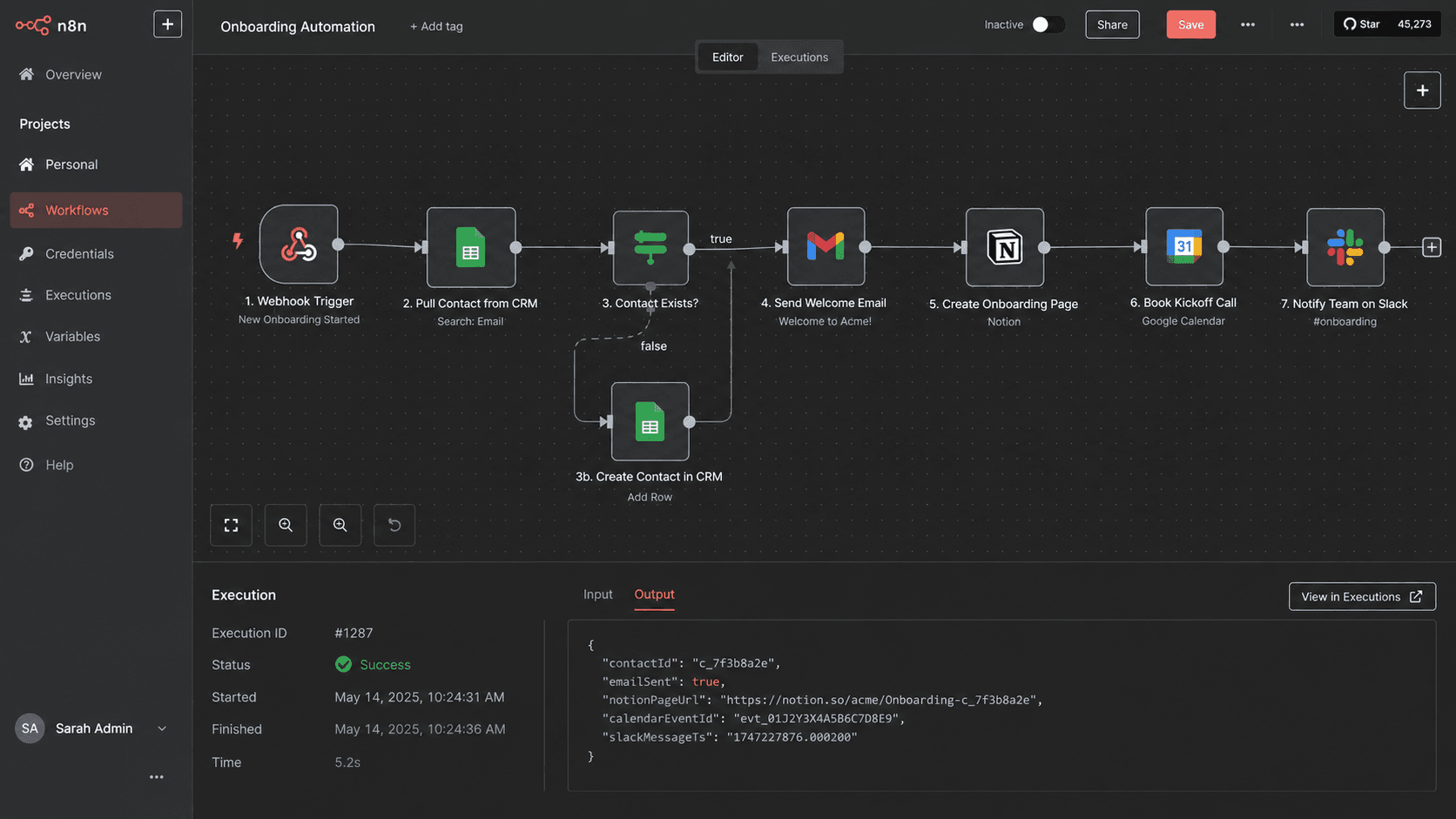
From Manual to Autonomous: How GarunaCDX Deployed an AI Agent System That Replaced 40 Hours of Weekly Operations
ReadRun a business business with similar operational pain?
Tell us your bottleneck — we’ll scope yours in a free 30-minute call.
Free consultation · Reply within 24 hours · No credit card